Understanding Federal Motor Carrier Safety Regulations

The Federal Motor Carrier Safety Regulations (FMCSRs) are a full set of federal rules designed to improve the safety of commercial motor vehicles (CMVs) operating on U.S. Highways. These regulations are administered by the Federal Motor Carrier Safety Administration (FMCSA), a branch of the U.S. Department of Transportation. The FMCSRs apply to vehicles engaged in interstate commerce, including large trucks, buses. And vehicles transporting hazardous materials, regardless of the state in which they operate. The primary goal of these regulations is to reduce crashes, injuries. And fatalities involving CMVs by establishing minimum safety standards for drivers, vehicles. And motor carriers.
Related glossary terms: Tort Law, Gross Negligence, Hazardous Materials.
The FMCSRs cover a wide range of safety-related topics, from driver qualifications and hours of service to vehicle maintenance and cargo securement. For example, the regulations specify the maximum number of hours a driver can operate a CMV without rest to prevent fatigue-related accidents. They also require motor carriers to conduct regular inspections, repairs. And maintenance on their vehicles to ensure they're safe to operate. And the FMCSRs include rules for securing cargo to prevent load shifts, spills. Or other hazards that could lead to accidents on the road.
How Federal Motor Carrier Safety Regulations Works, Is Measured. Or Is Used?
The FMCSRs are enforced through a combination of compliance reviews, roadside inspections. And audits conducted by federal and state authorities. Motor carriers are required to maintain records of driver qualifications, hours of service, vehicle inspections. And maintenance activities. These records must be made available to inspectors during compliance reviews or roadside checks. Violations of the FMCSRs can result in fines, penalties. Or even the shutdown of a motor carrier’s operations if safety violations are severe or repeated.
One of the key components of the FMCSRs is the Hours of Service (HOS) rules, which limit the amount of time a driver can spend behind the wheel. For example, property-carrying drivers are limited to 11 hours of driving after 10 consecutive hours off duty. Passenger-carrying drivers, such as bus drivers, are limited to 10 hours of driving after 8 consecutive hours off duty. These rules are designed to prevent driver fatigue, which is a leading cause of accidents involving commercial vehicles. The FMCSRs also require drivers to take regular breaks and maintain logs of their driving and rest periods, which can be reviewed during inspections.
Another critical aspect of the FMCSRs is vehicle maintenance and inspection. Motor carriers must conduct pre-trip and post-trip inspections of their vehicles to identify and address any safety issues. And vehicles must undergo regular inspections by qualified inspectors to ensure they meet federal safety standards. Cargo securement is another area covered by the FMCSRs, with specific rules for how loads must be secured to prevent shifting or falling during transit. These rules help reduce the risk of accidents caused by unsecured or improperly loaded cargo.
Why Federal Motor Carrier Safety Regulations Matters?
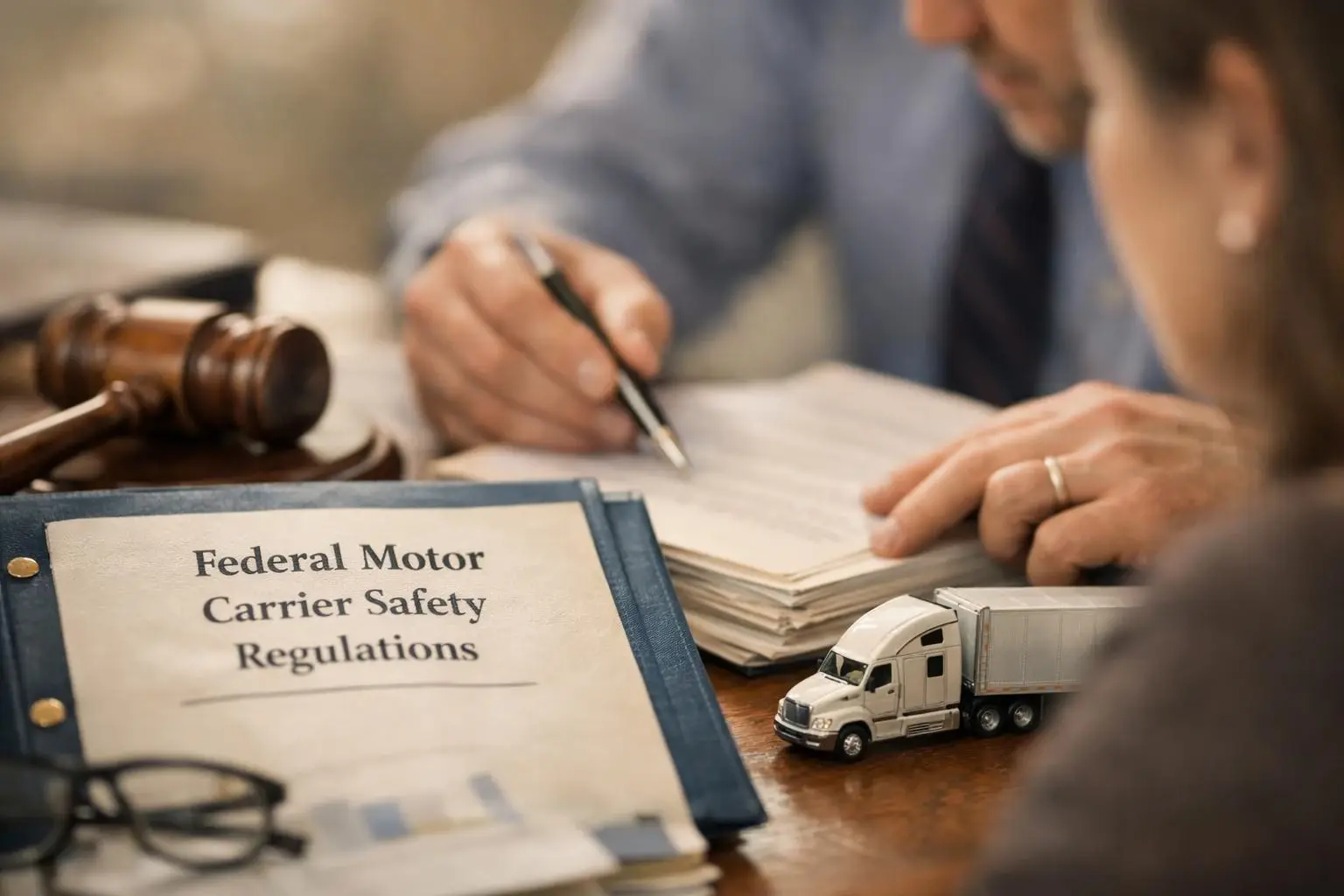
The FMCSRs play a crucial role in protecting public safety by reducing the risk of accidents involving commercial motor vehicles. Large trucks and buses are significantly heavier and larger than passenger vehicles, which means accidents involving these vehicles can result in catastrophic injuries or fatalities. By enforcing strict safety standards, the FMCSRs help prevent accidents caused by driver fatigue, vehicle defects. Or improper cargo securement. These regulations also promote accountability among motor carriers, encouraging them to prioritize safety in their operations.
For individuals involved in accidents with commercial vehicles, the FMCSRs can be an important factor in determining liability. If a motor carrier or driver violates these regulations, it may be considered evidence of negligence in a personal injury case. For example, if a truck driver exceeds the maximum hours of service and causes an accident due to fatigue, the violation of the FMCSRs could be used to establish liability. Similarly, if a vehicle was not properly maintained or inspected, resulting in a mechanical failure that caused an accident, the motor carrier could be held responsible for failing to comply with federal safety standards.
When Federal Motor Carrier Safety Regulations Matters Most?
The FMCSRs are particularly important in situations involving accidents with commercial vehicles, regulatory compliance reviews. Or safety inspections. For motor carriers, compliance with these regulations is essential to avoid fines, penalties. Or shutdowns. For drivers, following the FMCSRs helps ensure their safety and the safety of others on the road. In personal injury cases, violations of the FMCSRs can be critical in establishing negligence and liability, especially when accidents result in serious injuries or fatalities.
For local customers, In Decatur, GA. And the surrounding Atlanta metro area, the FMCSRs are especially relevant due to the high volume of commercial truck traffic on major highways like I-285, I-75. And I-85. These roads are frequently used by trucks transporting goods across state lines, making compliance with federal safety regulations a key factor in preventing accidents. For individuals injured in accidents involving commercial vehicles, understanding the FMCSRs can help determine whether a violation contributed to the crash and whether legal action may be warranted.