Glossary

What is Medical Payments Coverage?

Medical Payments Coverage is an optional auto insurance benefit that pays for reasonable medical expenses incurred by the policyholder, their passengers. Or family members after a car accident, regardless of who caused the crash. These payments typically cover hospital visits, doctor bills, X-rays. And funeral costs up to the policy’s limit, usually within one to three years of the accident.

Reviewed by Ronnie MabraSources reviewed: Georgia Office of Insurance and Safety Fire Commissioner, Insurance Information Institute

Quick Facts About Medical Payments Coverage

Category

Auto insurance coverage

Used for

Accident-related medical expenses

Common confusion

Often mistaken for liability insurance or Personal Injury Protection (PIP)

Also called

MedPay

Often discussed with

Car Accident Lawyer

Key Takeaways About Medical Payments Coverage

Understanding Medical Payments Coverage

Medical Payments Coverage in Personal Injury Lawyer: Medical Payments Coverage is an optional auto insurance benefit that...

Medical Payments Coverage, often called MedPay, is a feature of auto insurance policies that helps pay for medical expenses after a car accident. Unlike liability insurance, which covers injuries to others when the policyholder is at fault, MedPay covers the policyholder, their passengers. And sometimes even pedestrians injured by the vehicle. This coverage is optional in most states, including Georgia. And is not required by law. But it can be a valuable addition for drivers who want extra protection for themselves and their passengers.

Related glossary terms: Liability Insurance, Personal Injury Protection, No-Fault Insurance.

MedPay is designed to cover immediate medical costs, such as emergency room visits, ambulance fees, doctor appointments, and even funeral expenses if needed. The coverage applies regardless of who caused the accident, which means it can provide quick financial relief without waiting for fault to be determined. This can be especially helpful in situations where health insurance is limited or has high deductibles, But MedPay limits are typically low, ranging from

How Medical Payments Coverage Works?

When an accident occurs, MedPay can be used to cover medical expenses for the policyholder and their passengers, regardless of who was at fault. The process begins when the policyholder or a covered individual seeks medical treatment for injuries sustained in the accident. The policyholder submits the medical bills to their insurance company, which then reimburses the expenses up to the policy’s limit. This can happen quickly, often within weeks. Because fault doesn't need to be established for MedPay to apply.

MedPay is measured by the policy’s limit, which is the maximum amount the insurance company will pay per person. For example, if a policy has a ,000 MedPay limit and three passengers are injured, each passenger could receive up to ,000 for their medical expenses. But the total payout can't exceed the policy’s overall limit. MedPay does not cover property damage, lost wages. Or pain and suffering—only medical costs. And MedPay is considered a secondary coverage, meaning it can be used alongside health insurance to cover deductibles or copays.

A common issue is In Georgia, MedPay is not required. But drivers can add it to their policy for an additional premium. The cost of MedPay varies depending on the insurer, the coverage limit. And the driver’s risk profile. For example, a policy with a ,000 limit might add to per year to the premium. Drivers should review their policy details carefully to understand what is covered and any exclusions that may apply, such as injuries sustained while committing a crime or using the vehicle for commercial purposes.

Why Medical Payments Coverage Matters?
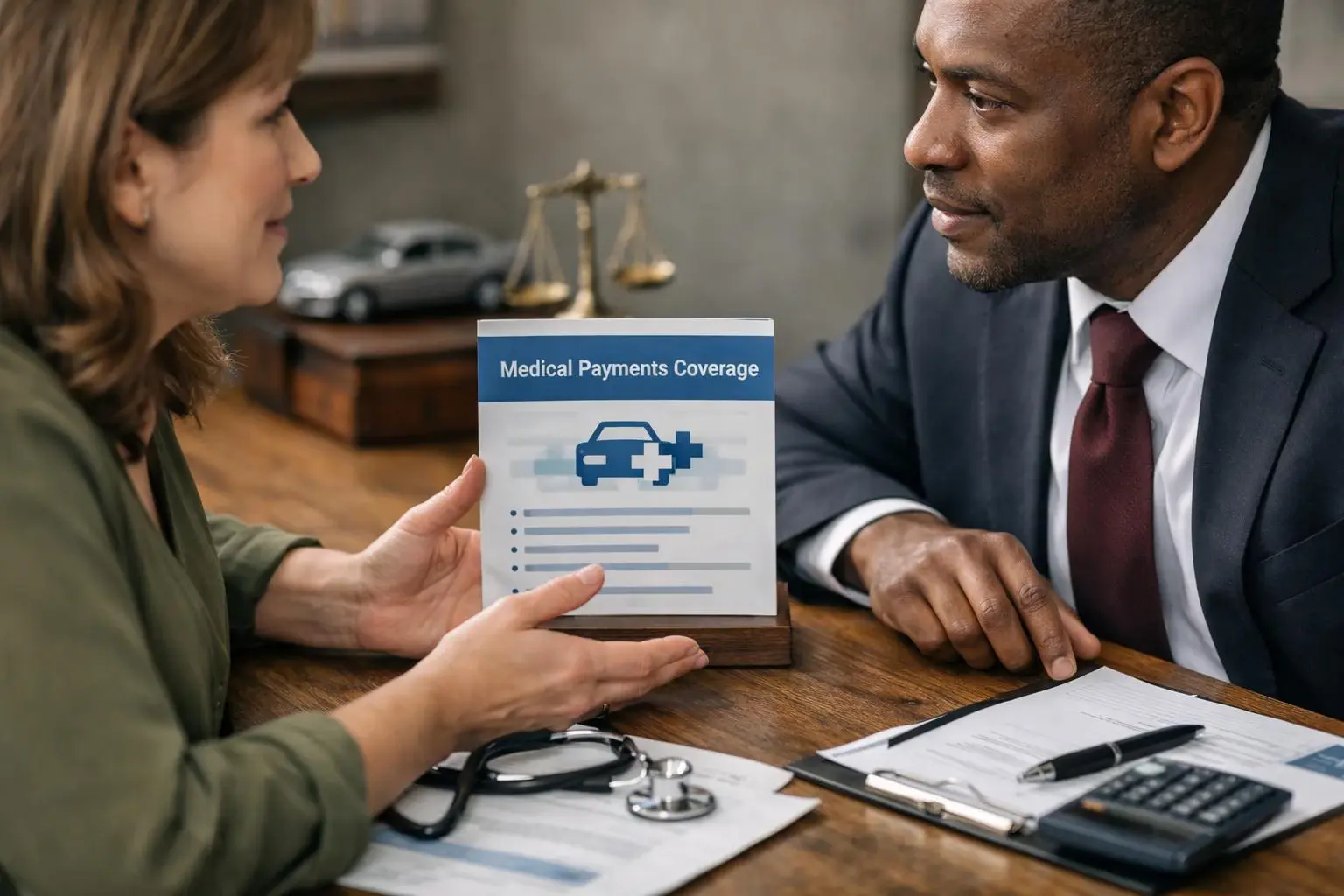
How Medical Payments Coverage applies to Personal Injury Lawyer services in Decatur, United States—practical illustration

Medical Payments Coverage matters because it provides a financial safety net for accident-related medical expenses, which can add up quickly even in minor crashes. Without MedPay, drivers and passengers may have to rely solely on their health insurance, which can leave them responsible for high deductibles, copays. Or out-of-pocket costs. MedPay can also help cover medical expenses for passengers who don't have health insurance, ensuring they receive necessary care without delay.

Another key benefit of MedPay is that it can help avoid disputes over fault. Since MedPay covers expenses regardless of who caused the accident, it can provide immediate relief while liability is being determined. This can be particularly important in cases where fault is contested or unclear, as it allows injured parties to focus on recovery rather than financial stress. And MedPay can complement other types of coverage, such as Personal Injury Protection (PIP) or uninsured motorist coverage, providing an extra layer of protection for drivers and their families.

When Medical Payments Coverage Matters Most?

Medical Payments Coverage becomes especially important in situations where medical expenses are likely to exceed health insurance coverage or when passengers lack adequate insurance. For example, if a driver is involved in a minor accident but sustains injuries requiring an ambulance ride and emergency room visit, MedPay can cover these costs without waiting for fault to be established. This can be crucial for drivers who have high-deductible health insurance plans, as MedPay can help cover the deductible and reduce out-of-pocket expenses.

MedPay also matters in cases involving passengers, such as family members or friends, who may not have health insurance or whose insurance does not cover car accidents. In these situations, MedPay can ensure that passengers receive necessary medical care without financial hardship. And MedPay can be useful in hit-and-run accidents or collisions with uninsured drivers, where liability coverage may not apply. While MedPay does not cover property damage or lost wages, it can provide clear next steps by ensuring that medical expenses are covered quickly and without dispute.

In Georgia, where MedPay is optional, drivers should consider their personal risk factors when deciding whether to add this coverage to their policy. For example, drivers who frequently transport passengers, such as families with children or carpoolers, may find MedPay particularly valuable. Similarly, drivers with limited health insurance or high deductibles may benefit from the added financial protection. But drivers with strong health insurance coverage may find that MedPay is unnecessary, as their existing insurance may already cover accident-related medical expenses.

How to Evaluate Medical Payments Coverage?

Related Concepts Compared

Medical Payments Coverage vs. Personal Injury Protection (PIP)

PIP is a broader coverage that includes medical expenses, lost wages. And other costs. While MedPay only covers medical bills. PIP is required in some states but not in Georgia.

Medical Payments Coverage vs. Liability Insurance

Liability insurance covers injuries to others when the policyholder is at fault. While MedPay covers medical expenses for the policyholder and passengers regardless of fault.

Medical Payments Coverage vs. Health Insurance

Health insurance covers medical expenses for illnesses and injuries, including car accidents. But may have high deductibles. MedPay is specific to auto accidents and can cover deductibles or copays.

Expert Note

MedPay is often overlooked but can be a cost-effective way to ensure quick payment for accident-related medical expenses. It is especially useful for drivers with high-deductible health insurance or those who frequently transport passengers without robust coverage.

Common Mistakes or Myths About Medical Payments Coverage

  • Assuming MedPay covers lost wages or property damage—it only covers medical expenses.
  • Believing MedPay is required in Georgia—it is optional and not mandated by law.
  • Confusing MedPay with liability insurance, which covers injuries to others when the policyholder is at fault.
  • Overlooking MedPay limits, which are typically low and may not cover all medical expenses in severe accidents.
  • Assuming MedPay replaces health insurance—it is a secondary coverage that complements existing insurance.

Medical Payments Coverage in Practice: A Real-World Example

After a rear-end collision in Decatur, GA, a driver and their two passengers were taken to the hospital for minor injuries. The driver’s MedPay coverage paid for their ambulance ride and emergency room visits, totaling ,500. Since MedPay applies regardless of fault, the driver received reimbursement within weeks, avoiding out-of-pocket costs while liability was being determined.

Sources & Further Reading on Medical Payments Coverage

  • Georgia Office of Insurance and Safety Fire Commissioner
  • Insurance Information Institute
  • National Association of Insurance Commissioners

Related Services

Related Terms

Liability Insurance

Liability Insurance is a type of coverage that protects policyholders from financial losses if they're found legally responsible for causing injury to another person or damaging someone else’s property. It typically covers medical expenses, legal fees. And repair costs up to the policy’s limits. But doesn't pay for the policyholder’s own injuries or damages.

Personal Injury Protection

Personal Injury Protection is a type of auto insurance coverage that pays for medical expenses, lost wages. And other related costs for the policyholder and passengers after a car accident, regardless of who caused the crash. It's often called 'no-fault' coverage because benefits are paid without determining fault. And it is required in some states, including Georgia.

No-Fault Insurance

No-Fault Insurance is a type of auto insurance coverage that pays for medical expenses, lost wages. And other accident-related costs regardless of who caused the collision. It's designed to speed up claim payments and reduce lawsuits by allowing each driver’s own insurance to cover their injuries and damages up to a set limit.

Underinsured Motorist Coverage

Underinsured Motorist Coverage is an auto insurance policy add-on that pays for medical bills, lost wages. And pain-and-suffering damages when the at-fault driver’s liability limits are too low to cover the full cost of injuries. This coverage bridges the gap between the other driver’s policy limits and the injured party’s actual damages.

Tort Law

Tort Law is a branch of civil law that allows individuals to seek compensation when they suffer harm or loss due to another party’s wrongful actions or negligence. It covers injuries, property damage. And other losses caused by accidents, intentional acts. Or failures to act responsibly. The goal is to restore the injured party to their pre-harm condition, often through financial damages.

Atlanta Auto Law

Have Questions About Medical Payments Coverage?

Contact Atlanta Auto Law for practical guidance on Medical Payments Coverage and related personal injury lawyer work in Decatur.

+1 678-235-3870