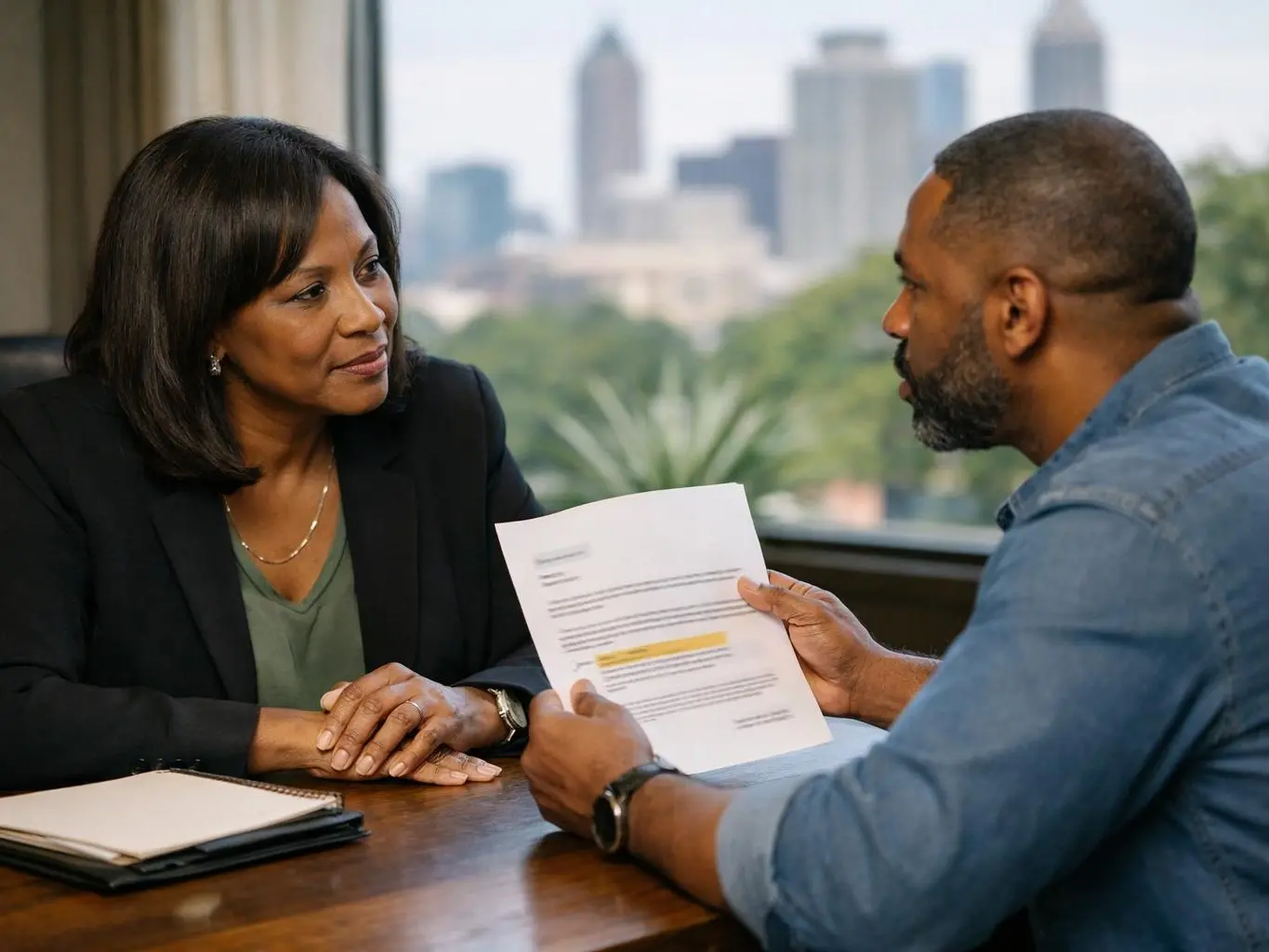
Loss of Consortium is a legal claim for damages suffered by a spouse or family member when an injured person’s accident-related harm deprives them of companionship, affection, sexual relations, household services. Or emotional support. Courts recognize this harm as separate from the injured person’s own losses and allow compensation in personal injury cases.
Category
Non-economic damages
Used for
Compensating family members for relational harm
Common confusion
Often mistaken for the injured person’s own pain and suffering claim
Also called
Loss of Companionship, Consortium Damages
Often discussed with
Car Accident Lawyer, Wrongful Death Attorney

Loss of Consortium is a legal term that refers to the deprivation of benefits a family member—typically a spouse—experiences when a loved one is seriously injured in an accident. These benefits include emotional support, companionship, affection, sexual relations. And household services like childcare or chores. While the injured person may receive compensation for medical bills or pain and suffering, Loss of Consortium addresses the separate harm suffered by their family.
Related glossary terms: Pain and Suffering, Catastrophic Injury, Tort Law.
The concept originates from common law, where marriage was viewed as a partnership with mutual rights and duties. Over time, courts expanded this idea to recognize that accidents can disrupt these relationships in measurable ways. For example, if a car crash leaves a parent unable to play with their children or a spouse unable to provide emotional comfort, the family experiences a real, compensable loss. Georgia law follows this principle, allowing claims for these relational harms in personal injury cases.
To succeed in a Loss of Consortium claim in Georgia, the family member must prove three key elements: (1) the injured person suffered harm due to another’s negligence or wrongdoing, (2) the family member had a close, legally recognized relationship with the injured person (usually a spouse. Though some states include children or parents). And (3) the injury caused a significant, long-term disruption to their relationship. Courts evaluate factors like the couple’s history, the severity of the injury. And how the accident altered daily life.
Loss of Consortium claims are derivative, meaning they depend entirely on the injured person’s case. If the injured person loses their claim or fails to prove negligence, the family member’s claim typically fails as well. Compensation is determined by a jury or negotiated settlement, often based on testimony about the relationship before and after the injury. Unlike medical bills or lost wages, there’s no fixed formula—damages reflect the intangible nature of love, support. And shared experiences.

Loss of Consortium matters because accidents don’t just harm individuals, they disrupt entire families. A spouse who can no longer rely on their partner for emotional support or a child who loses a parent’s guidance faces real, lasting consequences. Compensation for these losses acknowledges that relationships have value beyond financial contributions. Without this legal protection, families might bear the emotional and practical burdens of an injury without any remedy.
In practice, From a practical standpoint, Loss of Consortium claims also encourage accountability. When negligent parties - like distracted drivers or unsafe employers, are held responsible for both physical and relational harm, it reinforces the importance of safety and care in daily activities. For families, these claims can provide financial stability during a difficult transition, helping cover costs like counseling or household help when the injured person can no longer contribute.
Loss of Consortium claims become especially important in cases involving catastrophic injuries, such as traumatic brain injuries, spinal cord damage. Or wrongful death. These injuries often result in permanent changes to a person’s ability to interact with their family, making the relational harm more severe and long-lasting. For example, a parent who suffers a brain injury might struggle with memory, mood swings. Or personality changes, straining their relationship with their spouse and children.
In Georgia, Loss of Consortium claims must be filed within two years of the accident, the same statute of limitations as other personal injury cases. This deadline underscores the importance of acting quickly, as evidence about the relationship’s impact may fade over time. Common scenarios where these claims arise include car accidents, workplace injuries, medical malpractice. And defective product cases. While no amount of money can restore a lost relationship, compensation can help families adjust to their new reality.
Pain and Suffering compensates the injured person for their physical and emotional harm. While Loss of Consortium compensates family members for their own relational losses.
Wrongful Death claims arise when an accident kills someone. While Loss of Consortium applies when the injured person survives but their relationships are harmed.
Loss of Consortium claims require nuanced evidence—juries respond to specific, heartfelt testimony about how the injury altered daily life, not just generic statements about missing a spouse’s company.
After a truck accident left John with a spinal cord injury, his wife Sarah filed a Loss of Consortium claim. She testified that John, once an active father, could no longer coach their son’s soccer team or help with household repairs. The jury awarded her compensation for the lost companionship and support, recognizing how the accident had changed their family dynamic.
Pain and Suffering is a legal term for the physical discomfort, emotional distress. And mental anguish a person endures after an injury caused by another’s negligence. It covers ongoing pain, anxiety, depression, loss of enjoyment of life. And other non-economic harms that can't be measured by medical bills or lost wages alone.
Catastrophic Injury is a severe physical harm that permanently alters a person’s ability to perform daily activities, work. Or live independently. These injuries often result from sudden trauma, such as car accidents, falls. Or violence. And typically involve the brain, spinal cord, limbs. Or internal organs. Recovery may require lifelong medical care, rehabilitation. And assistive devices.
Tort Law is a branch of civil law that allows individuals to seek compensation when they suffer harm or loss due to another party’s wrongful actions or negligence. It covers injuries, property damage. And other losses caused by accidents, intentional acts. Or failures to act responsibly. The goal is to restore the injured party to their pre-harm condition, often through financial damages.
Comparative Negligence is a legal principle used in personal injury cases to determine how fault is shared between parties involved in an accident. It allows a damaged party to recover compensation even if they are partially at fault, with their recovery reduced by their percentage of responsibility. This rule contrasts with contributory negligence, which bars recovery if any fault is assigned to the injured party.
Atlanta Auto Law
Contact Atlanta Auto Law for practical guidance on Loss of Consortium and related personal injury lawyer work in Decatur.