Understanding Rideshare Accident Claims
Rideshare accident claims depend on the driver's status, available insurance coverage, fault evidence, and the injured person's role in the crash. Atlanta Auto Law reviews these issues, helps preserve claim evidence, and offers .
Written by Ronnie Mabra
Request an Estimate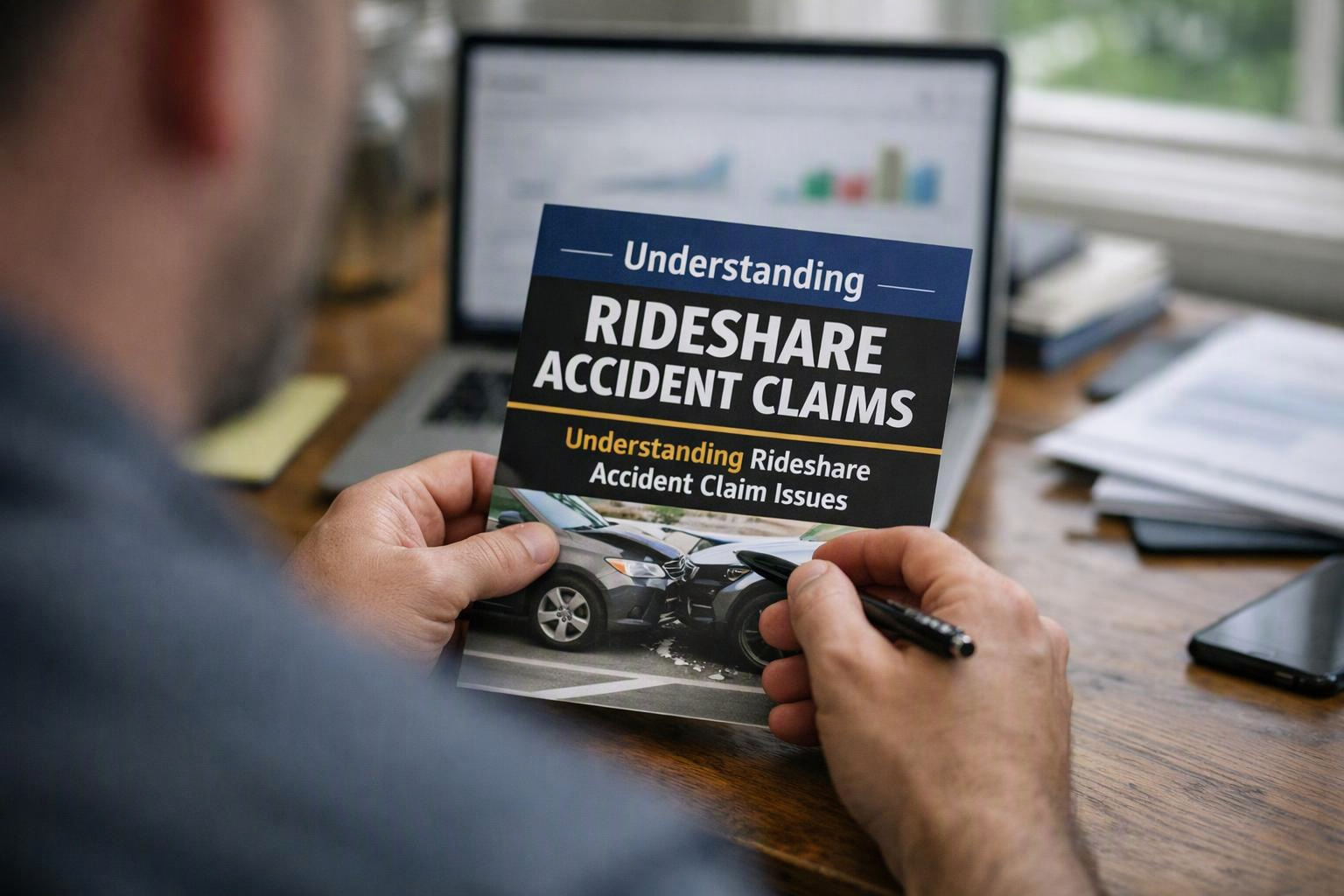
Rideshare accident claims are determined by driver status, insurance coverage, liability evidence, and claimant role. Our team reviews these facts together because a rideshare crash can involve overlapping insurance policies and several possible sources of responsibility.
Readers seeking help can contact our Rideshare Accident Lawyer team to discuss the collision and the available evidence.
Written by Ronnie Mabra
What Makes Rideshare Accident Claims Different?
Rideshare accident claims are different because coverage and responsibility can change with the driver's app status, trip status, and role in the collision.
A rideshare driver may be logged out, waiting for a request, traveling to a passenger, or carrying a passenger. Each status can affect which insurance policy responds to a motor vehicle accident.
A rideshare passenger may have a claim for bodily injury even when the passenger did nothing to cause the crash. Liability may involve the rideshare driver, another motorist, a vehicle owner, or the rideshare company.
We identify each person's role, collect the available collision evidence, and examine how negligence and applicable insurance coverage affect the claim.
Which Insurance Policy May Apply After a Rideshare Crash?
The applicable insurance policy depends on what the rideshare driver was doing in the app when the crash occurred and which parties have potential liability.
A coverage investigation may involve personal auto insurance, rideshare insurance, and coverage supplied through the rideshare company. The exact analysis depends on the driver's app status, trip status, policy language, and collision facts.
| Driver app or trip status | Insurance issues to review | Evidence that may matter |
|---|---|---|
| Offline driver | The driver's personal auto insurance may be central to the claim. | Policy information, driver statements, and accident evidence. |
| Available driver waiting for a request | Personal and rideshare insurance may require review under the applicable coverage period. | App activity, policy terms, and the accident report. |
| En route to a passenger | Rideshare company coverage and other applicable policies may need review. | Trip information, app records, and collision evidence. |
| Transporting a passenger | Company coverage, personal coverage, and other liability sources may be examined. | Passenger records, witness evidence, and vehicle damage. |
Coverage disputes can arise when insurers interpret app activity or policy terms differently. We compare the available records with the insurance policy and the facts of the crash before assessing the claim.
How Driver Status Changes the Insurance Analysis
Driver status changes the insurance analysis because an offline driver, available driver, driver en route to a passenger, and driver transporting a passenger may fall within different insurance coverage periods.
The app may show whether the driver was available for a request or completing a trip. We request and preserve relevant trip information, app activity, policy documents, and claim communications when those records help establish coverage.
Policy language can also affect the analysis. Our team reviews the insurance policy alongside the app records instead of relying only on a driver's description of the trip.
Who May Be Responsible for a Rideshare Accident?
Responsibility for a rideshare accident may involve the rideshare driver, another motorist, a vehicle owner, or a rideshare company, depending on the evidence and applicable law.
Negligence may include distracted driving, unsafe lane changes, speeding, following too closely, or another failure to use reasonable care. The evidence may also show that more than one person contributed to the collision.
Comparative fault rules can affect how responsibility is assigned when the injured person or several drivers may share fault. We examine statements, photographs, vehicle damage, traffic information, witness evidence, and the police report as part of the fault determination.
The rideshare company may become relevant when company records, app activity, or other facts connect the business to the driver's conduct or the coverage dispute. We do not assume company liability without reviewing the facts that support it.
What Should You Document After a Rideshare Accident?
Documenting the crash scene, injuries, treatment, witnesses, vehicle damage, and rideshare trip information helps preserve evidence for the claim.
Records can become harder to obtain as time passes. Our team helps organize the available information so the accident report and injury documentation can be compared with the insurance investigation.
Do not alter or discard records that may show the driver's trip status or the condition of the vehicles. We help preserve evidence and identify gaps that may affect liability or damages.
How Are Injuries and Damages Evaluated in a Rideshare Claim?
Rideshare claim damages are evaluated through injury records, treatment needs, income effects, property damage, and other evidence connecting losses to the collision.
Bodily injury claims may include medical expenses, ongoing medical treatment, pain and suffering, and the effect of the injury on daily activities. Medical records help connect the symptoms and care to the rideshare collision.
Lost income or lost wages may require employment records, pay information, work restrictions, and evidence of time missed. We organize those records with the medical documentation and the account of how the injury affected work.
Property damage includes vehicle damage and other covered losses tied to the crash. Our settlement evaluation considers the available damages evidence and the liability evidence together.
How Atlanta Auto Law Reviews a Rideshare Accident Claim
Atlanta Auto Law reviews the collision facts, driver status, insurance information, injury documentation, and liability evidence before evaluating the claim.
Our claim investigation follows the evidence from the crash scene through the insurance coverage dispute. We explain what the records show and identify the issues that require further support.
Our team keeps the claimant's role in view throughout the review. A rideshare passenger injury claim, rideshare driver injury claim, pedestrian claim, or vehicle occupant claim may require different evidence.
What Should You Do If an Insurer Disputes Rideshare Coverage?
If an insurer disputes rideshare coverage, preserve the denial and claim communications while the policy terms, app status, crash evidence, and available coverage are reviewed.
A coverage dispute may concern whether the driver was using the app, whether a trip had started, which policy applies, or whether another party bears liability. We examine the insurance policy and compare the insurer's position with the app activity and collision evidence.
Be careful with recorded statements or written descriptions that do not account for the full trip status and injury history. Our team helps preserve evidence, respond to claim communications, and protect the claimant's rights during the policy investigation.
Insurance denial does not by itself resolve liability or the claimant's available options. We review the denial, the accident report, medical records, witness evidence, and other claim documentation before discussing the next step.
Questions About Rideshare Accident Claims
What happens if the rideshare driver was not carrying a passenger?
Atlanta Auto Law reviews whether the rideshare driver was offline, available for a request, or traveling to a passenger because each status can affect the applicable insurance coverage. App activity, personal auto insurance, rideshare insurance, and policy terms may all matter.
Can a rideshare passenger make a claim after an accident?
Yes, a rideshare passenger can make a claim when the collision caused a bodily injury or other covered loss. The claim may involve the rideshare driver's policy, rideshare company coverage, another motorist's insurance, or more than one source of liability.
What if the rideshare driver caused the crash?
If the rideshare driver caused the crash through negligence, the driver's insurance and applicable rideshare company coverage may be reviewed. The driver's app status, trip status, policy terms, and evidence of fault help determine the available claim path.
What if another driver caused the rideshare accident?
If another driver caused the rideshare accident, that driver's liability insurance may be central to the claim. We also review the rideshare driver's coverage and the claimant's role because available coverage can depend on the trip status and the injuries involved.
Should I speak with the rideshare insurer after an accident?
Speak carefully with the rideshare insurer because the insurer may ask for a claim statement before coverage and injuries are fully documented. Preserve communications and obtain guidance from our team before accepting a coverage position or describing disputed facts.
What evidence can show the rideshare driver's app status?
App activity records, trip receipts, pickup and drop-off details, driver communications, and company records can help show the rideshare driver's app status. The police report, witness evidence, and statements may help confirm the timing and circumstances of the trip.
Can a rideshare accident claim include medical bills and lost income?
Yes, a rideshare accident claim can include medical bills and lost income when the records connect those losses to the collision. Medical records, treatment documentation, employment information, work restrictions, and other damages evidence support the evaluation.
Rideshare accident claims require a careful review of driver status, insurance coverage, liability, claimant role, and documented damages. Atlanta Auto Law can review the available facts and explain how we approach the claim investigation.
Contact Atlanta Auto Law to discuss your rideshare accident claim and preserve important evidence.
Get a Free Estimate