Evidence That Can Help Document a Personal Injury Claim
Evidence for a personal injury claim can include photographs, medical records, witness information, incident reports, communications, and records showing losses. Atlanta Auto Law reviews how each item supports the account of what happened, the injury, and its effects.
Written by Ronnie Mabra
Request an Estimate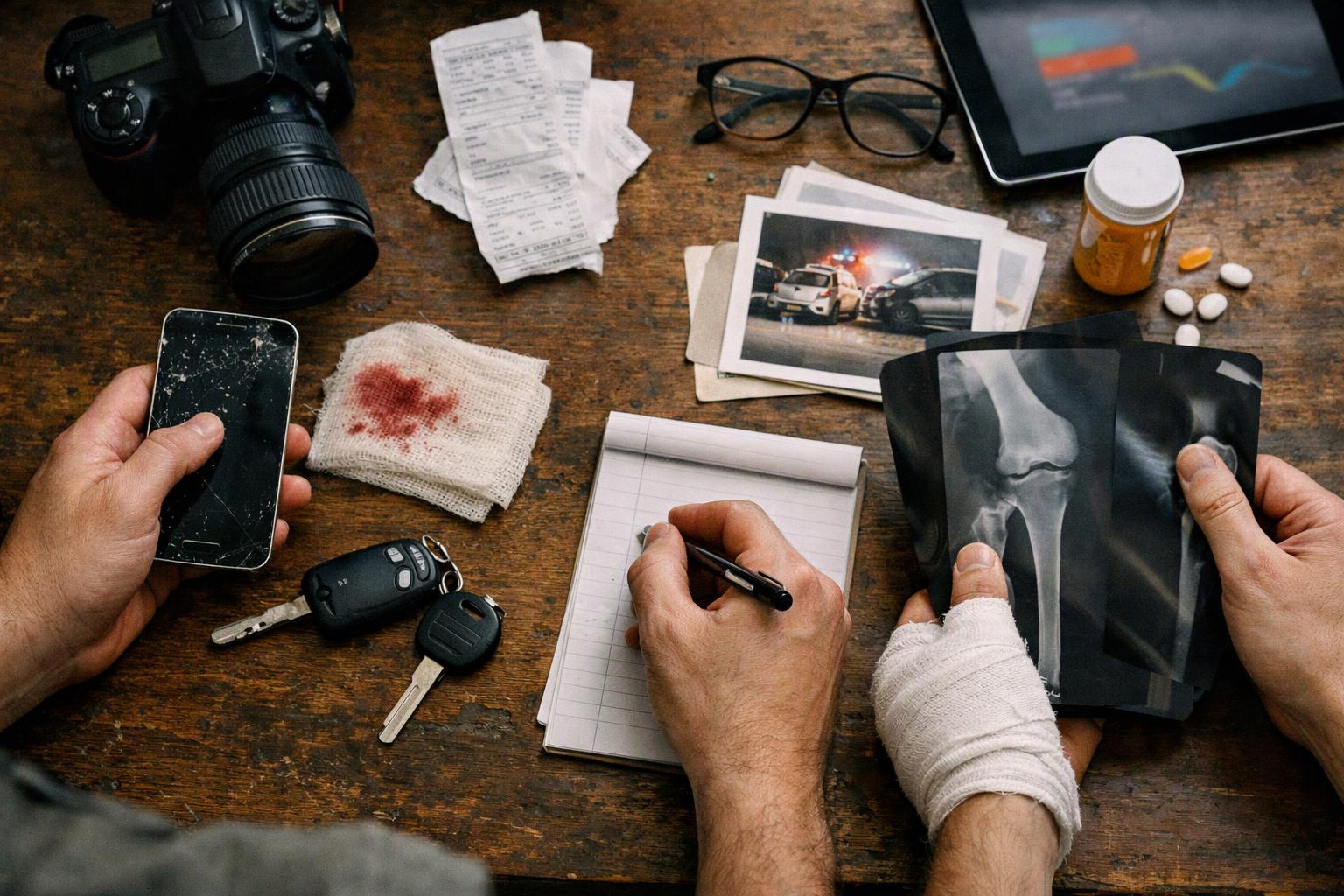
Author: Ronnie Mabra
What Evidence Can Help Support a Personal Injury Claim?
Personal injury claim evidence can support a claim by connecting the event to the injury, showing how the injury affected the claimant, and documenting resulting losses. Atlanta Auto Law organizes the available records to help explain what happened, who may be responsible, and what the injury caused.
Useful claim documentation may include photographs, medical records, witness information, incident reports, communications, and financial loss records. These materials can help prove what happened, connect the injury to the event, establish responsibility, and show damages.
For a motor vehicle case, our team may review the evidence involved in Car Accident Claims. The strength of the record depends on how clearly the evidence supports causation, liability, medical treatment, and injury-related losses.
Photographs and Videos Can Preserve What Happened
Photographs and videos can preserve scene conditions that may change after an accident or injury. Images should show the subject clearly and include enough date and context to explain where and when they were taken.
Medical Records Show the Injury and Its Effects
Medical records can show the nature of an injury, the treatment connected to it, and the continuing effects documented by healthcare providers. Atlanta Auto Law reviews emergency treatment, diagnostic testing, treatment plans, and follow-up care as part of our claim investigation.
Records may also document physical limitations, ongoing symptoms, medical bills, and the effect of pain on daily activities. Medical providers may address pre-existing conditions when describing the injury and its change after the event.
Consistent medical documentation can help connect the injury to the event. Our team compares treatment records with the case timeline and other evidence when evaluating causation and damages.
Witness Statements and Incident Reports Add Independent Detail
Witness statements and incident reports can add independent accounts of the event, the surrounding conditions, and what happened immediately afterward. A witness may describe the account of events, scene conditions, or visible symptoms that the injured person could not observe.
Witness information should include contact information and a clear description of what the person saw or heard. Our team may follow up with an eyewitness to preserve details while the memory remains useful.
A police report may contain information about a car accident claim, while an incident report may document a property event. A property manager or first responder may also have records relevant to notice, conditions, or the response after the injury.
Records Can Document Financial and Personal Losses
Financial and personal records can document the losses that followed an injury. Atlanta Auto Law organizes damages evidence to show how the injury affected work, care needs, daily activities, property, and personal comfort.
Different records may support different parts of a claim:
| Loss | Helpful records | What the records may show |
|---|---|---|
| Lost income | Employment records and income records | Missed work, reduced earnings, or work restrictions |
| Medical expenses | Medical bills and treatment records | Costs connected to medical treatment |
| Out-of-pocket expenses | Receipts and expense records | Transportation, supplies, or other injury-related spending |
| Caregiving needs | Care records and personal notes | Help required with daily activities |
| Pain and limitations | Treatment records and activity notes | Changes in movement, sleep, work, or daily life |
| Property damage | Photographs, repair records, and insurance records | Damage connected to the event |
How We Investigate and Organize Claim Evidence
Atlanta Auto Law investigates a personal injury claim by organizing the timeline, preserving relevant materials, reviewing records, and connecting evidence to responsibility and losses. Our team separates liability evidence from damages evidence while checking how the records fit together.
What to Bring to a First Meeting About a Personal Injury Claim
A first meeting is more productive when you bring records that show the event, the injury, responsibility, and financial losses. Bring what you have, even if the information is incomplete or still being collected.
How to Preserve Evidence After an Injury
Evidence preservation means keeping original files, records, messages, and relevant physical items without altering or discarding them. Original photographs, digital messages, emails, and video recordings may retain information that can be lost through editing or forwarding.
Keep damaged personal property in its condition when practical, and save medical paperwork with related bills and communications. Social media posts may also become relevant, so preserve accurate records and avoid changing posts that relate to the event or your condition.
Our team can help identify evidence that needs preservation during a claim investigation. We review the available materials and organize them so the record remains clear and reliable.
How Evidence Differs by Type of Personal Injury Claim
Evidence differs by claim type because each case depends on different questions about responsibility, conditions, and injury. Atlanta Auto Law matches the investigation to the facts that may establish liability and damages.
| Claim type | Evidence that may matter | Main questions |
|---|---|---|
| Car accident claim | Vehicle damage, traffic evidence, photographs, police report, and witness information | How did the crash happen, and who may be responsible? |
| Pedestrian accident claim | Scene photographs, traffic conditions, vehicle information, and witness statements | What were the roadway, visibility, and movement conditions? |
| Bicycle accident claim | Bicycle damage, traffic evidence, photographs, and medical records | What happened on the road, and how did the impact cause the injury? |
| Slip and fall claim | Photographs, incident report, property condition, lighting, and notice records | What hazard existed, and who may have known about it? |
| Negligent security claim | Security condition, incident report, photographs, communications, and property records | What security condition existed, and what notice or response records are available? |
When Should You Discuss Claim Evidence With Atlanta Auto Law?
A personal injury consultation can help when an injury may be connected to another party’s conduct or property condition. Atlanta Auto Law reviews claim documentation, available evidence, and insurance communication so important information can be organized before decisions are made.
Early evidence review may help identify missing records, preserve original evidence, and clarify the case timeline. Contact us through Free Consultations to discuss the facts and the records connected to your claim.
Our team can explain how the available evidence may support liability, causation, and damages. We can also discuss the next steps for preserving and organizing the claim record.
Get a Free EstimateQuestions About Evidence for a Personal Injury Claim
Can text messages and emails help support a personal injury claim?
Yes, text messages and emails can help support a personal injury claim when they preserve statements, notice, scheduling, symptoms, or communications about the event. Atlanta Auto Law reviews the original messages and their context before connecting them to the case timeline.
What should I do if a witness does not want to provide a statement?
Respect the witness's decision and preserve the contact information if the witness willingly provides it. Our team can consider other records and may determine whether a later follow-up is appropriate without pressuring the witness.
Can social media posts affect a personal injury claim?
Yes, social media posts can affect a personal injury claim when they appear to conflict with reported symptoms, limitations, or the account of events. Preserve relevant posts and avoid changing or deleting content that may relate to the claim.
What happens if some evidence is no longer available?
Missing evidence does not automatically decide a personal injury claim because other records may help establish what happened, the injury, responsibility, and losses. Atlanta Auto Law documents what remains available and looks for related photographs, reports, communications, medical records, and witness information.