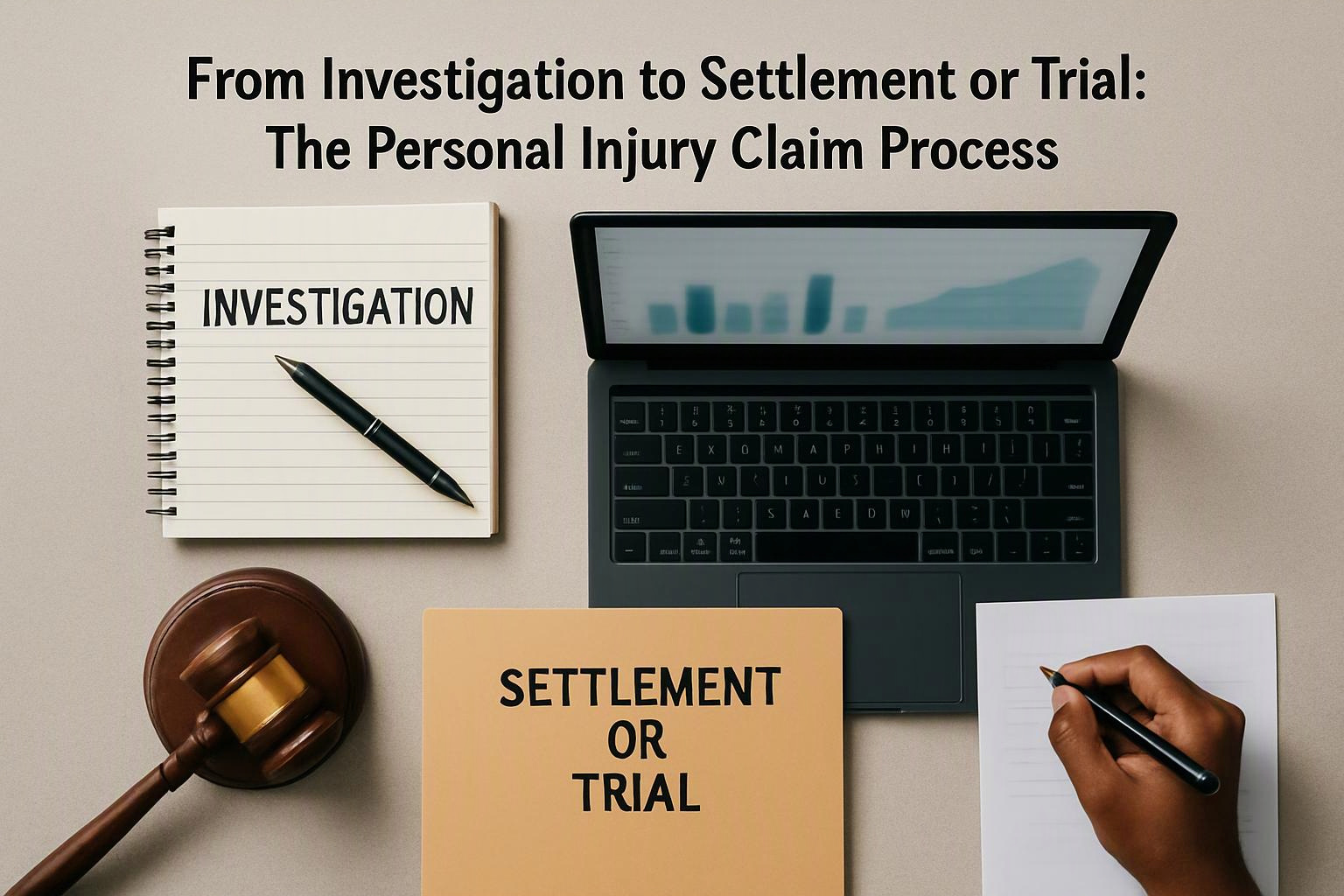
From Investigation to Settlement or Trial: The Personal Injury Claim Process
The personal injury lawsuit process begins with investigating liability and damages, then moves through demand, negotiation, and possible litigation. Atlanta Auto Law reviews the evidence, handles claim communications, and prepares the case for settlement or trial when appropriate.
Written by Ronnie Mabra
Request an EstimateWhat Is the Legal Process for a Personal Injury Case?
The legal process for a personal injury case moves from case evaluation and evidence gathering through an insurance claim, negotiation, and possible court litigation.
A personal injury claim begins with an initial consultation about the injury, the at-fault party, and the available evidence. We examine whether negligence involved a duty of care, a breach of that duty, and causation.
We also evaluate damages, including medical bills, lost wages, pain and suffering, economic damages, and noneconomic damages. The claim may proceed through an insurance claim, a civil lawsuit, or both as the case develops.
For collisions, our team handles matters such as Car Accident Claims by connecting the facts of the crash to the losses caused by the injury.
Author: Ronnie Mabra
How We Investigate a Personal Injury Claim
Atlanta Auto Law investigates a personal injury claim by collecting evidence that connects the at-fault party's conduct to the injured person's losses.
Our review focuses on facts that can support liability, damages, and causation. The investigation can also reveal disputes that must be addressed during settlement negotiations or litigation.
What Happens During the Insurance Claim?
The insurance claim stage presents documented liability and damages to the insurer and seeks a settlement that reflects the supported losses.
We usually communicate with the insurance adjuster and prepare a demand package that explains the facts, legal responsibility, medical documentation, lost income, and property damage.
A demand letter can identify the injured person's losses and request a settlement demand. The insurer may respond with questions, a denial, or a settlement offer.
Our team reviews each response against the evidence. We address unsupported arguments, preserve important records, and advise the injured person about the choices that affect the claim.
Do Most Personal Injury Cases Settle Out of Court?
Yes, many personal injury cases resolve through negotiation, but settlement is appropriate only when the proposed agreement fairly addresses the supported claim and its consequences.
Settlement negotiation gives the parties control over whether to resolve the dispute and on what terms. We evaluate the case value by reviewing liability, medical evidence, future effects, available insurance coverage, and the strength of the damages claim.
A settlement agreement usually requires a release. That release may end the claim against the parties covered by the agreement, so we review its language before advising whether to accept it.
Settlement authority belongs to the injured person. Our role is to explain the compensation available under the evidence, the strengths and weaknesses of the case, and the risks of accepting or rejecting an offer.
What Happens When a Fair Settlement Is Not Offered?
When a fair settlement is not offered, the injured person may pursue a civil lawsuit so the evidence and legal arguments can be presented through the litigation process.
We may prepare and file a civil complaint that identifies the plaintiff's allegations and the relief requested. The defendant then receives service of process and has an opportunity to file an answer.
After the answer, the court process may include discovery, motion practice, conferences, and other court filings. Litigation can create new opportunities to test the evidence and continue settlement discussions.
Filing a lawsuit does not automatically require a trial. Our team keeps evaluating the case while preparing it for court if negotiation does not produce a fair result.
What Happens During Discovery and Case Preparation?
Discovery and case preparation organize the evidence, identify disputed facts, and develop the proof needed for settlement or trial.
Each discovery tool serves a different purpose. We prepare responses carefully and use the information received to refine the legal strategy.
How Is Settlement Different From Trial?
Settlement resolves a personal injury dispute by agreement, while trial asks a judge or jury to decide the contested issues after hearing the evidence.
The right choice depends on the case facts, the available proof, the proposed terms, and the risks each path presents.
| Settlement | Trial |
|---|---|
| The parties agree to terms and the injured person accepts compensation described in the agreement. | A judge or jury decides disputed issues after hearing testimony and reviewing evidence. |
| The parties have more control over the outcome and can define the release and other conditions. | The outcome depends on the court's rulings and may include a jury verdict. |
| The agreement ends the covered claims according to its terms. | An appeal may be possible after judgment, which can add legal steps and uncertainty. |
| Legal costs, preparation demands, and risk depend on the dispute and the agreement reached. | Trial preparation requires substantial work and carries the risk that the court result may not match the requested compensation. |
How Atlanta Auto Law Guides a Claim Toward Resolution
Atlanta Auto Law guides a personal injury claim by matching case strategy to the evidence, the damages, and the available path to resolution.
We begin with an evidence review that identifies strengths, gaps, and disputed facts. Our team then manages insurance communications so statements and documents support a clear evaluation of the claim.
During settlement evaluation, we compare each offer with the supported losses and the risks of continued litigation. If the case requires a court filing, we continue preparing the evidence, witnesses, and legal arguments for court.
Georgia personal injury law can affect liability, damages, deadlines, and available remedies. We explain how those rules apply to the facts before recommending a case strategy.
Which Personal Injury Claims Follow This Process?
Many injury disputes follow the same basic path of investigation, insurance review, negotiation, and possible litigation.
The evidence and responsible parties can change by claim type. Our team adjusts the investigation and legal strategy to the facts of the incident.
What Should You Do After an Injury Before the Claim Begins?
After an injury, seek medical care, document the incident, preserve evidence, and obtain legal guidance before making important claim decisions.
Medical care creates records that can show the nature of the injury and the treatment it requires. Keep medical bills, instructions, photographs, and notes about symptoms and daily limitations.
Incident documentation can include photographs, witness contact details, damaged property, and communications related to the event. Preserve evidence in its original form when possible.
Give required claim notice, but communicate carefully with the insurance company. An insurance adjuster may ask for a recorded statement or broad medical authorization, and we can review those requests with you.
A legal consultation can help preserve evidence, identify the responsible parties, and explain the next steps before a demand or complaint is prepared.
Contact Atlanta Auto Law to discuss your injury claim and the path toward settlement or trial.
Contact Atlanta Auto LawQuestions About the Personal Injury Claim Process
Can a personal injury claim settle after a lawsuit is filed?
Yes, a personal injury claim can settle after a lawsuit is filed because settlement discussions may continue throughout litigation. Atlanta Auto Law evaluates new evidence, court developments, and settlement terms before advising on an agreement.
What evidence helps prove negligence in a personal injury case?
Evidence that helps prove negligence may include photographs, witness statements, incident reports, medical records, communications, and expert opinions. The evidence should connect the duty of care, breach, causation, and damages.
What does a personal injury lawyer do during settlement negotiations?
A personal injury lawyer presents the evidence, communicates with the insurer, evaluates settlement offers, addresses disputed issues, and explains the risks of accepting or rejecting proposed terms.
What happens if the other party denies responsibility for the injury?
If the other party denies responsibility, the claim requires stronger evidence about liability, causation, and damages. The dispute may continue through investigation, discovery, motion practice, settlement negotiations, or trial.
Can a personal injury case go to trial after an insurance settlement offer?
Yes, a personal injury case can go to trial after an insurance settlement offer if the offer is rejected and no agreement is reached. An offer alone does not resolve the claim until the injured person accepts the terms and signs the required release.
Related Resources
Contingency Fees vs Hourly Fees: What to Compare Before Hiring
What Goes With ItMedical Malpractice Claims: Misdiagnosis, Surgical Errors, and Birth Injuries
What Goes With ItInsurance Disputes and Personal Injury Claims: When Bad Faith May Be an Issue
How Long It TakesHow Long Does a Personal Injury Case Take?