Skip to content

Workplace Injury Claims in Vinings, Georgia

Equipment makers can share liability for workplace injuries in Vinings when defective design, warnings, or instructions contributed to harm. We provide clear legal guidance and personalized attorney-led communication.

Upfront, Transparent PricingServing 51 CommunitiesMon-Sun: Open 24 hoursFast Scheduling

Quick Summary: workplace injury claims in Vinings, Georgia

Workplace Injury Claims in Vinings are handled by Atlanta Auto Law for workers seeking accountability after job injuries involving equipment makers, property owners, staffing agencies, or maintenance contractors. The firm also handles insurance claims, injury compensation, and complex accident litigation.

  • What we do: Atlanta Auto Law investigates Workplace Injury Claims involving third-party responsibility in Vinings, Georgia.
  • What is included: The work includes evidence gathering, insurance claim support, injury compensation analysis, and complex accident litigation.
  • What you get: The client receives a reasoned assessment of possible third-party liability and the next legal step.

Can an equipment maker be liable for my workplace injury in Vinings, Georgia?

Yes, an equipment maker can be liable when a design defect, manufacturing problem, missing warning, or unsafe instruction contributed to the injury. Evidence can include the product, manuals, purchase records, maintenance history, photographs, witness accounts, and medical records. A careful review helps separate a product claim from a workers compensation issue.

Workplace Injury Claims in Vinings, Georgia and third-party responsibility

This page addresses a focused question: can another party be responsible for a workplace injury? That question matters when an injury involves a machine, a worksite condition, a staffing arrangement, or outside maintenance.

The buyer must decide whether to seek only workers compensation benefits or examine a separate claim against another party. We review the incident report, medical records, product information, contracts, photographs, and witness statements to assess that choice.

A third-party case has limits. The evidence must connect the outside party’s conduct or product to the injury, and the claim must fit the facts and applicable Georgia law. We explain that distinction during a free consultation.

  • Identify every company involved with the equipment, site, staffing, or maintenance.
  • Preserve photographs, incident reports, product manuals, and medical records.
  • Separate workers compensation benefits from a possible third-party claim.
  • Ask how evidence supports liability before deciding how to proceed.
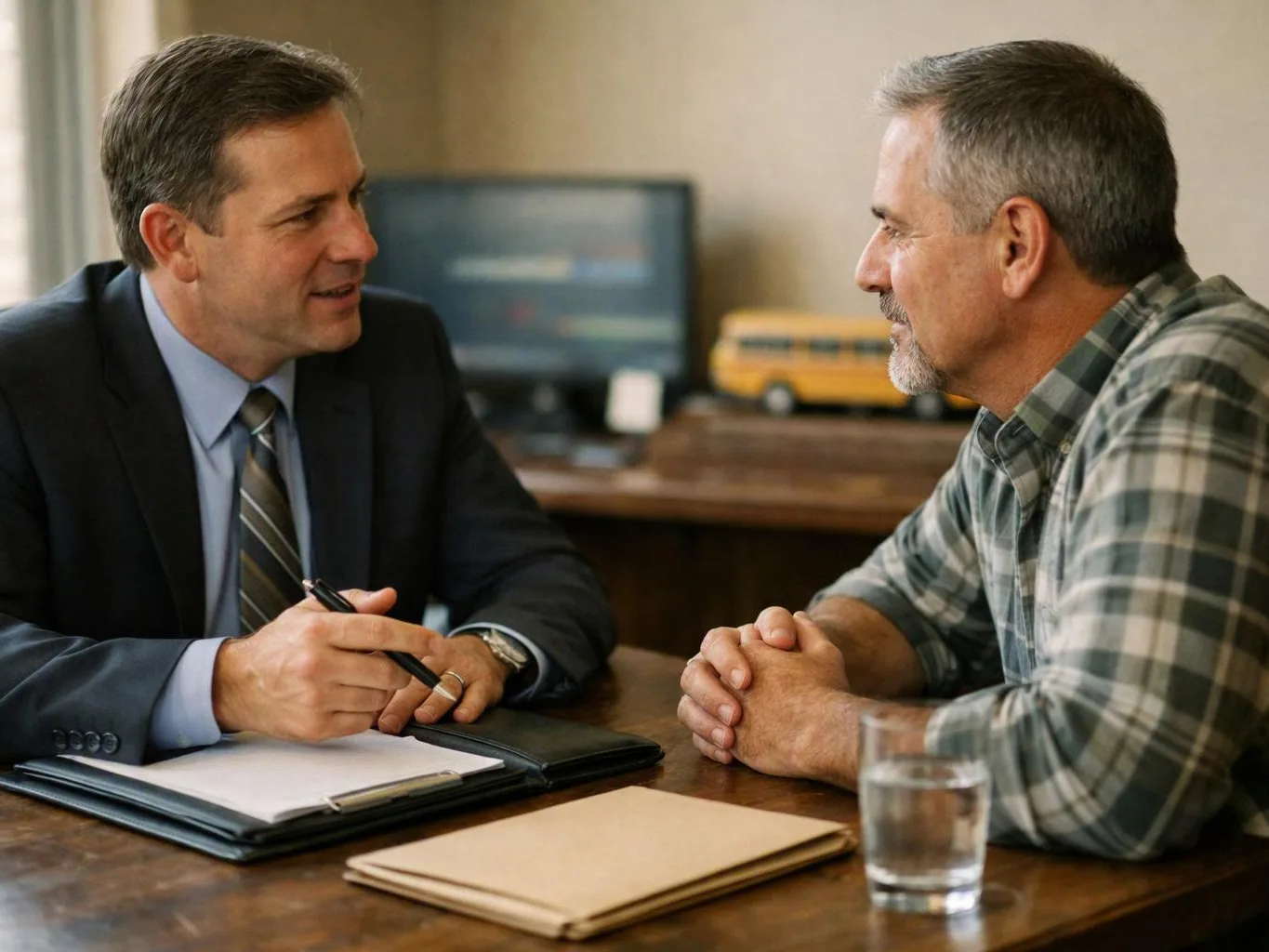
Two men sit across a table in an office, one taking notes while they talk

Service Overview

Workplace injury claims are legal claims that address harm suffered during work and possible responsibility beyond workers compensation.

  • A third-party claim differs from a workers compensation claim because it may focus on another company’s product, property, service, or conduct.
  • Atlanta Auto Law handles these matters for injured workers in Vinings and throughout Metro Atlanta.

What this review changes for an injured worker

A liability review can identify a claim beyond workers compensation benefits.

Document review helps connect the injury to a product, property condition, or outside service.

Insurance claim support gives the worker one legal team for key claim communications.

Attorney-led analysis helps the client understand the difference between evidence and assumption.

The review can clarify whether negotiation, mediation, discovery, or trial fits the case.

Process

How we handle a third-party workplace injury claim

1

Review the injury and work setting

We discuss what happened, where it happened, the equipment or service involved, medical treatment, and the companies connected to the event.

2

Preserve records and physical evidence

We identify useful records such as incident reports, manuals, maintenance logs, contracts, photographs, witness accounts, and medical records.

3

Assess each party’s conduct

We examine whether a product defect, warning problem, property condition, staffing role, or maintenance error contributed to the injury.

4

Address insurers and claim issues

We handle insurance communications and evaluate injury compensation as the evidence develops.

5

Choose the dispute path

Negotiation, mediation, discovery, or trial may fit depending on the evidence, liability dispute, and case needs.

How we approach third-party workplace injuries

Separate each party’s role

We map the actions of equipment makers, property owners, staffing agencies, and maintenance contractors. The right claim depends on what each party supplied, controlled, repaired, or failed to warn about.

Build the evidence record

Product manuals, maintenance logs, contracts, incident reports, and medical records can support different parts of a claim. We organize those records before taking a position on liability.

Know when the claim does not fit

This service may not fit when the available facts show no outside party caused or contributed to the injury. We explain that limit during the case evaluation.

What workplace injury claim help includes

Atlanta Auto Law provides comprehensive Workplace Injury Claims in Vinings. Here's what you get:

  • We review the workplace incident and identify parties that may share responsibility.
  • We examine equipment records, warnings, instructions, maintenance history, and photographs.
  • We gather police, workplace, and medical records when they support the claim.
  • We assess insurance coverage, injury compensation, and possible damages.
  • We communicate with insurers and address claim disputes when appropriate.
  • We handle complex accident litigation when negotiation does not resolve the matter.

Third-party roles in a workplace injury review

The responsible-party analysis changes with the role each outside company played.

Possible partyEvidence we examineQuestion the review answers
Equipment makerProduct, warnings, manuals, and design recordsDid a product problem contribute to the injury?
Property ownerWorksite condition, warnings, access, and control recordsDid the property condition create an unsafe hazard?
Staffing agencyAssignment, training, supervision, and communicationsDid the agency’s role contribute to the injury?
Maintenance contractorWork orders, service records, repairs, and safeguardsDid maintenance work leave the equipment unsafe?

The Atlanta Auto Law Standard

  • Direct Updates
  • Thorough Preparation
  • Personalized Guidance
  • Confidential Evaluation

Questions about third-party workplace injury claims

Can an equipment maker be liable for my workplace injury?

Equipment makers can be liable when a defect, unsafe design, missing warning, or faulty instruction contributed to the injury. Atlanta Auto Law reviews the product, manuals, maintenance records, incident reports, and medical evidence. The claim must connect the equipment problem to the harm. Product evidence should be preserved before repair, disposal, or alteration.

How does a workplace injury claim move from the first call to the last step?

The claim moves from intake and record review to liability analysis, insurance negotiation, and possible litigation. We first discuss the injury and involved parties. Then we gather evidence, assess compensation, communicate with insurers, and consider mediation or trial if negotiation does not resolve the dispute.

Which records help prove that another company caused the injury?

Incident reports, product manuals, maintenance logs, contracts, photographs, medical records, and witness accounts can support third-party liability. We compare those records with the injury details and work instructions. A missing record does not decide the claim by itself, but prompt preservation helps protect useful evidence.

What separates a third-party claim from workers compensation?

Workers compensation generally addresses benefits connected to a work injury, while a third-party claim examines another party’s fault. The outside party could relate to a product, property condition, staffing arrangement, or maintenance service. We assess both paths when the facts show possible responsibility beyond the employer.

How can a worker tell whether this service fits the injury?

A third-party review fits when a company beyond the employer may have caused or contributed to the injury. Useful clues include defective equipment, unsafe property, poor maintenance, or an outside staffing role. Atlanta Auto Law evaluates those facts during a free consultation before recommending a claim path.

Why preserve the equipment after a workplace accident?

The equipment can contain physical evidence of a defect, failed safeguard, or maintenance problem. Keep the machine and related parts unchanged when possible. Photographs, manuals, purchase records, and service logs can add context. Our team uses those materials to assess product responsibility and possible defenses.

What does a staffing agency’s role change in an injury review?

A staffing agency’s role can affect who hired, trained, assigned, or supervised the worker. Assignment papers, training records, workplace instructions, and communications help clarify those duties. We compare the agency’s role with the host business’s conduct and the injury evidence before assessing possible liability.
Contact

Discuss a workplace injury claim in Vinings

Call Atlanta Auto Law for a free consultation about your injury and possible third-party responsibility; urgent requests get priority scheduling.

Workplace Injury Claims in Other Areas

The information on this website is for general informational purposes only and is not legal advice, does not create an attorney-client relationship, and may not reflect current law in Decatur, Georgia, United States. Every situation is different; consult a licensed attorney about your specific matter. Prior results do not guarantee a similar outcome.

(678) 235-3870