
What Is a Crush Injury?
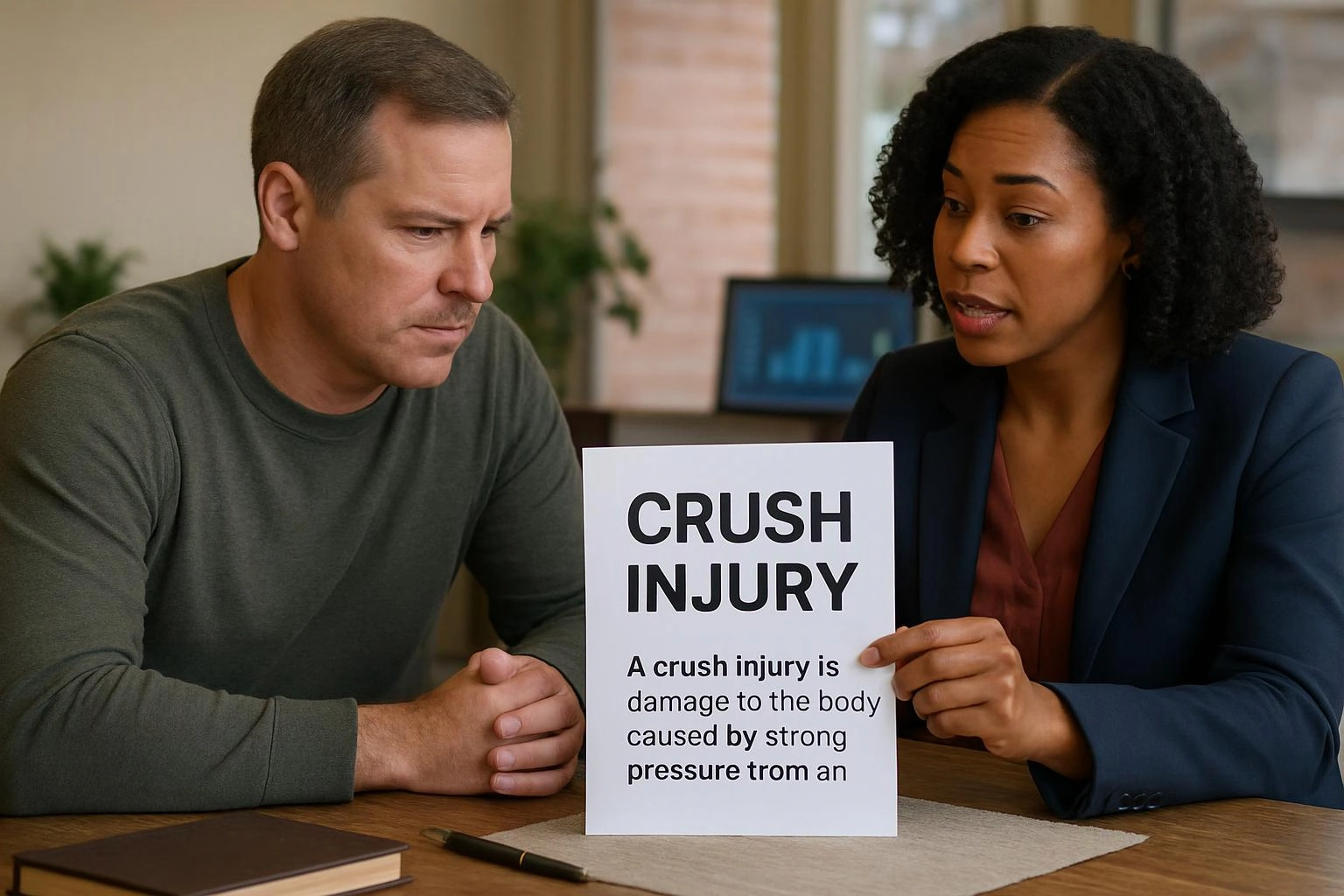
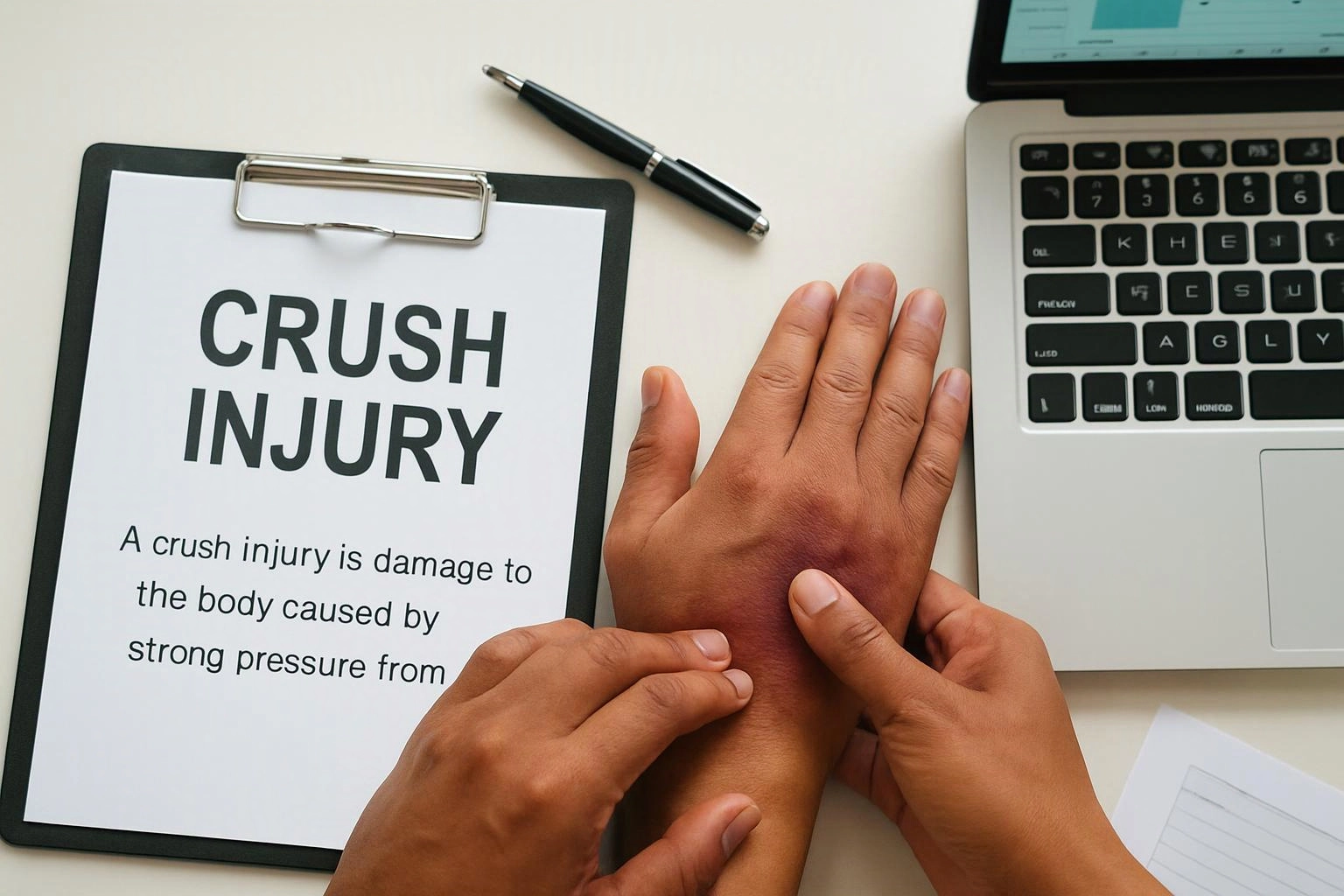
A crush injury is damage to the body caused by strong pressure from an object or force. The pressure can harm skin, muscles, nerves, or bones. A heavy load falling onto a worker's foot is an example. The damage beneath the skin may be more serious than the visible wound suggests.
Quick Facts About Crush Injury
- Category
- Physical injury
- Used for
- Describing damage from pressure
- Common confusion
- An injury is not itself a legal claim
- Often discussed with
- Workplace Injury Claims, Construction Accident Claims
Key Takeaways About Crush Injury
- Damage may extend beyond the area that looks hurt.
- Workplace records can help explain how the injury happened.
- Crush injury describes the damage, not the cause of a claim.
How Crush Injury Works
A crush injury can affect how the injured body part moves or feels. Pressure may harm nerves and interrupt blood flow in the affected area. A worker may have trouble gripping objects or putting weight on a foot. Related service: Workplace Injury Claims.
Related glossary terms: Causation, Damages, Product Defect.
Doctors describe the damage in medical records. Those records may show which body parts were affected and how the injury changed over time. They may also describe limits on ordinary tasks, such as lifting a box.
In a workplace claim, the injury is separate from the event that caused it. A report might describe a load falling, while medical records describe the resulting harm. Both kinds of records can help explain the connection between the event and the worker's condition.
From the Atlanta Auto Law team
When we review a workplace injury claim, we look at how the records connect the event to the harm. We also check whether job duties changed after the injury. That detail can help explain how the injury affects a worker's daily life.
Crush Injury in Practice: A Real-World Example
A warehouse worker's hand gets trapped beneath a shifting load. The worker's records describe damage to the hand and trouble gripping tools.
Related Terms
Causation
Causation is the connection between an action or failure to act and an injury in a personal injury claim.
Damages
Damages are money sought or awarded in a legal claim for harm or loss.
Product Defect
A product defect is a flaw in a product's design, construction, or warnings that makes the product unsafe.
Third-Party Claim
A third-party claim is a request for compensation from a person or business outside your employment relationship after a workplace injury.
Atlanta Auto Law
Have Questions About Crush Injury?
Contact Atlanta Auto Law for practical guidance on Crush Injury and related personal injury lawer acs work in Decatur.