
What Is Bad Faith?
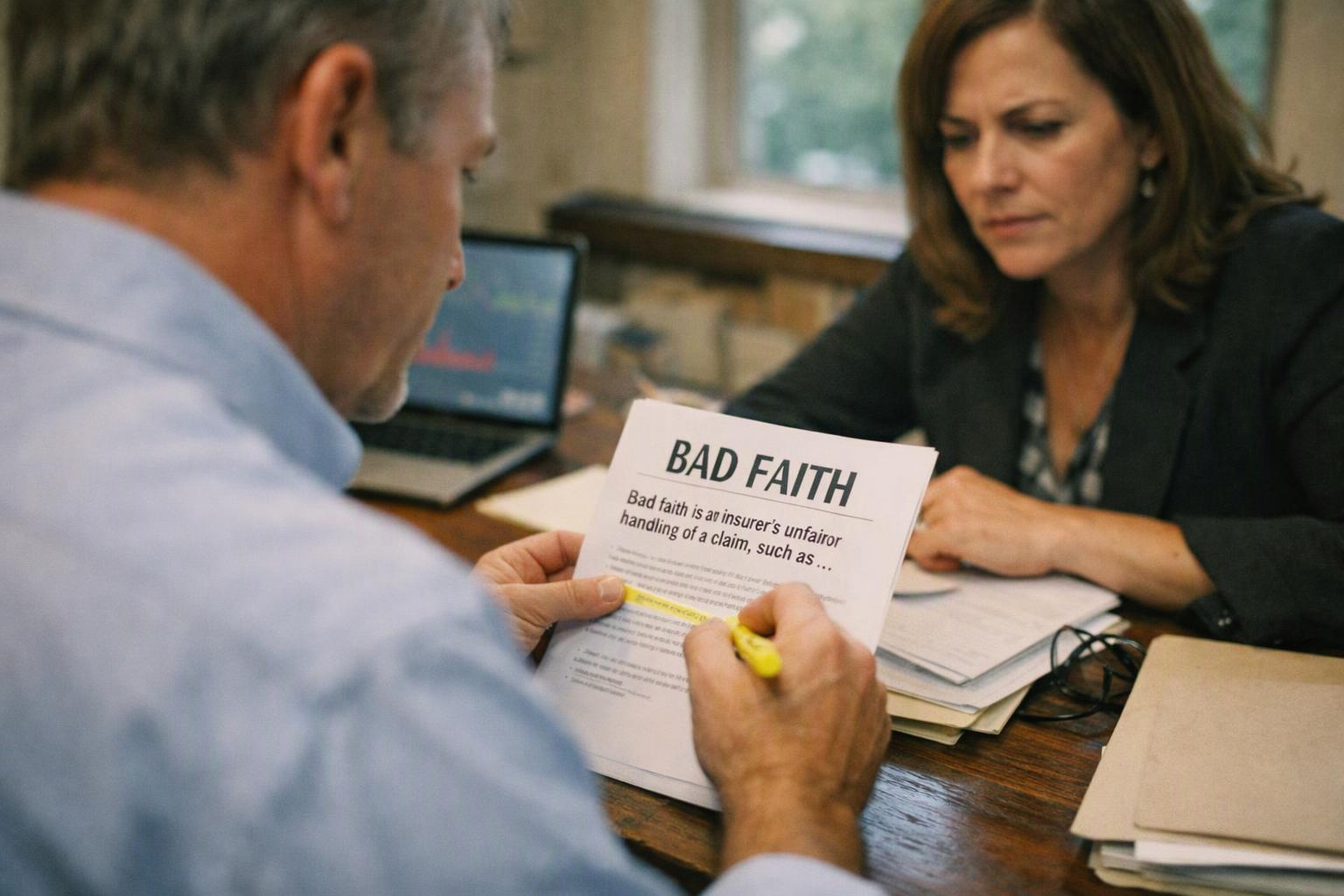
Bad Faith is an insurer’s dishonest, unfair, or unreasonable handling of a valid insurance claim. The conduct may include ignoring relevant evidence, delaying a decision without a sound reason, or refusing payment without a proper investigation. A bad faith claim examines the insurer’s conduct, not simply whether the original accident caused an injury. For more detail, see Car Accident Lawyer or Insurance Bad Faith Lawyer: Which Do You Need?.
Quick Facts About Bad Faith
Category
Insurance claim conduct
Used for
Claims involving unfair insurer handling
Common confusion
A denied claim is not automatically bad faith
Also called
Insurance Bad Faith
Often discussed with
Insurance Bad Faith Claims
Key Takeaways About Bad Faith
- Bad faith involves improper insurer conduct during claim handling.
- A disagreement does not automatically establish bad faith.
- Bad faith is not the same as ordinary negligence.
How Bad Faith Works

Bad Faith works by focusing on the insurer’s conduct after a claim begins. The review may consider whether the insurer gathered relevant information, responded to important evidence, and gave a reasoned explanation for its position. A difficult claim does not become bad faith simply because the insurer disputes liability or damages.
Related glossary terms: Actual Cash Value, At-Fault Driver, Comparative Negligence.
Insurance coverage and claim records often provide the setting for this analysis. Letters, recorded statements, medical records, repair estimates, and internal claim notes may help show what the insurer knew and when it acted. The strength of a claim depends on the facts, the policy language, and the applicable law. The same delay may have different meaning when new information explains it.
From the Atlanta Auto Law team
When we review a potential bad faith matter, we examine the policy, claim communications, supporting records, and the insurer’s stated reasons. We compare the insurer’s actions with the available evidence and assess whether the handling reflects a genuine coverage dispute or improper conduct.
Bad Faith in Practice: A Real-World Example
A person injured in a crash submits medical records and other claim evidence to the insurer. The insurer ignores material information, offers no reasoned explanation, and maintains a denial without a meaningful investigation, which may support a bad faith claim.
Related Services
Related Terms
Actual Cash Value
Actual Cash Value is the amount an insurer assigns to covered property after considering its condition…
At-Fault Driver
At-Fault Driver is the person whose negligent, reckless, or unlawful conduct caused a vehicle collision. Fault…
Comparative Negligence
Comparative Negligence is a legal rule that assigns each party a share of responsibility for an…
Punitive Damages
Punitive Damages are monetary awards designed to punish exceptionally wrongful conduct and discourage similar behavior. They…
Atlanta Auto Law
Have Questions About Bad Faith?
Contact Atlanta Auto Law for practical guidance on Bad Faith and related personal injury lawer acs work in Decatur.